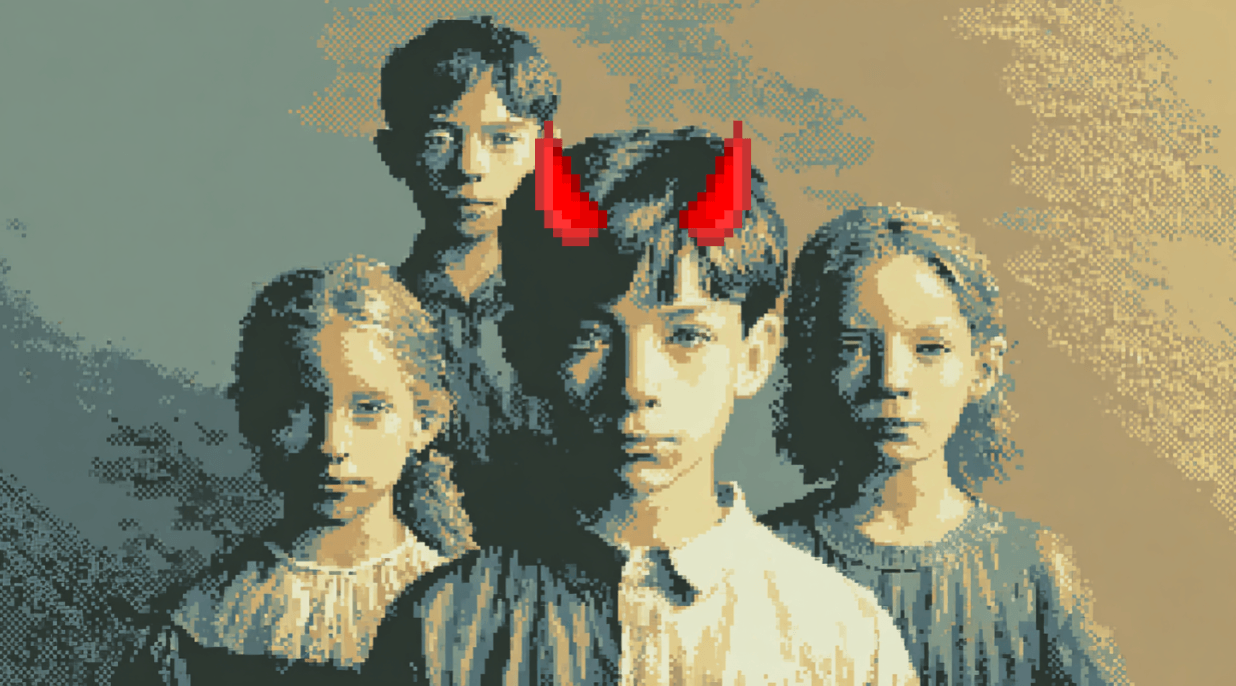
Edmund syndrome
Edmund syndrome names the formation of a younger or overlooked claimant inside a structure where significance is already assigned elsewhere. The Edmund figure is close enough to the centre to feel the heat of inheritance, rank, name, and recognition, but displaced from the authorised route into them. He is inside the family structure, inside the succession atmosphere, inside the language of importance, yet he receives no stable position within it.
The syndrome has a precise sequence. 1. The child learns that recognition is scarce. 2. He reads the older brother, the named heir, the approved child, or the institutionally favoured person as the blockage. 3. He becomes vulnerable to any outside figure who offers a shortcut into importance. 4. He starts to treat private elevation as repair. 5. If the environment gives him power over weaker people, the wound hardens into domination, punishment, and extraction. If the environment interrupts him, exposes consequences, and gives him another way to become significant, he can reshape himself.
In The Lion, the Witch and the Wardrobe, Edmund enters the story already placed in this structure. Peter carries eldest-boy authority. Susan carries seniority, steadiness, and social competence. Lucy carries earliest access to wonder. Edmund is the 3rd child. He has no priority, no stable authority, and no trusted access to the new world. Lucy is the earliest to find Narnia, Edmund follows, meets the White Witch separately, and is drawn in through Turkish Delight, warmth, flattery, secrecy, and the promise that he can become prince if he brings the others to her. The temptation is a substitute inheritance. The Witch offers him a route into singularity without Peter, without Lucy, and without having to earn trust inside the sibling group.
Edmund’s betrayal comes from this exact compression. He does not simply want sweets. He wants a position. The Turkish Delight matters because it joins appetite to rank. The throne matters because it gives him a future in which the others must pass through him. The secrecy matters because it gives him a private channel of recognition. The Witch does not invent his wound; she gives it architecture.


